As you may remember from the last post, I had planned ahead for this recipe. I bought all of the ingredients in advance, I decided which day I would make the dish, and I got home not starving. I was ready to call this easy recipe a mega-win.
Julia’s description was basically a story about my childhood: her parents were obsessed with Soy Vey, and this recipe features her version of that versatile marinade. I figured this would just be me making my own Soy Vey, pouring it over salmon, and baking it. Spoilers: Not only was the “easy” recipe actually pretty difficult, but the end result was not my favorite. To give this recipe some credit, the caption explains that this is a way to convert non-fish-fans to reconsider their stance, and being a fish-superfan, I expect my fish to be… fishier.
Here’s how it went down.
ROASTED SALMON WITH MAPLE AND SOY
From SMALL VICTORIES by Julia Turshen
Ingredients that I had to buy: salmon, ginger, sesame seeds. Rating: Very easy last minute ingredient list to pull together. That said, you have to figure out your own sides to make it a meal.
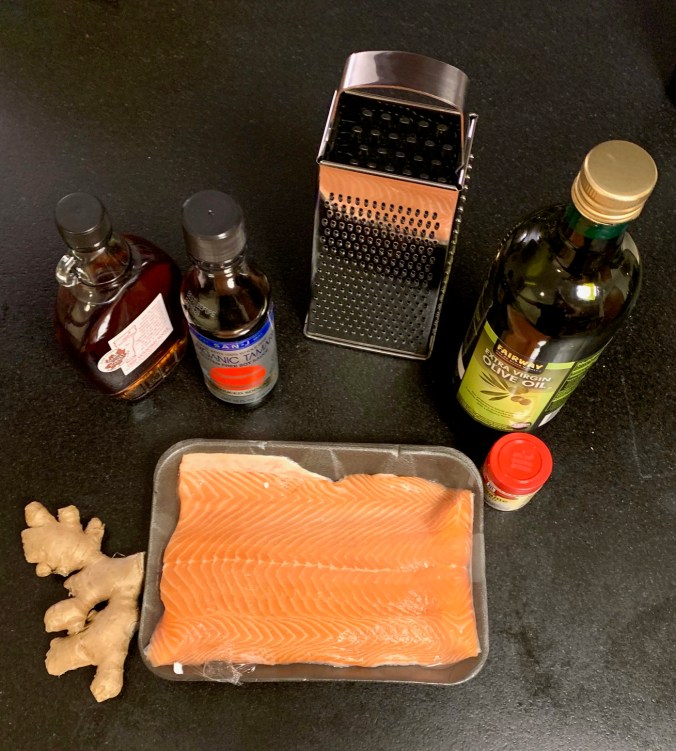
First step is to prep the ingredients as instructed. I bought a ginger root, which meant that my first real task was to mince the ginger. That took a while, but I’m proud to say no fingers were harmed in the making of the mince.
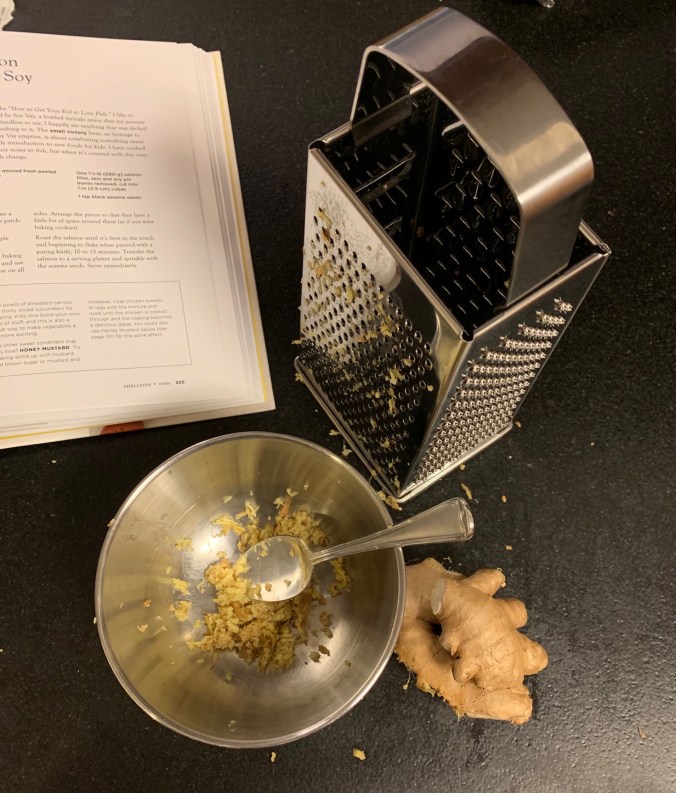
Next step is to assemble the marinade. I had already put the ginger into the assigned “small bowl”, so I added the olive oil, maple syrup, and soy sauce and stirred. I could have eaten just that part, and I basically did. For a side, I made basmati rice (based on what I had in the pantry already), and I made a stripped down version of the marinade for the rice: Freshly grated ginger, soy sauce, and a hint of maple syrup. It’s actually really good! I might also try this marinade on a grilled fish (instead of a roasted one) and see if the ginger flavor cuts through the grill marks.

This was where the recipe and I started to differ in opinions.
Cut the salmon into one-inch cubes. I mean, smaller pieces cut the cook time, sure, but as someone who likes my fish on the rarer side, it makes it way less likely to get the type of cook I like when it’s sliced that small.
In addition to cutting the fish, she says to have the cubes with the skin removed. For those who don’t know, removing skin from raw salmon without losing too much of the fish in the process is not easy. Having already spent too much time making a mess with the ginger-mincing, I decided to do a “taste test”: Does removing the skin really affect the end product?
The photo below shows little indication of physical differences between the Skins and the Non-Skins. For those keeping score, right hand side of the pan is the Skins.

Last step before cooking was put the marinade all over the fish, easy peasy. Then into the oven for 10 minutes, super fast. You will be happy to know that a lazy approach to this recipe is totally possible and tastes the same! No over-cooking, no ultra-stickiness, no discernible differences at all. Skin for the win!

I know Julia’s reasoning behind having the fish be skin-free was to serve it to picky eaters who don’t think they like fish. I can say that as a person who likes fish, eating around the skin doesn’t freak me out and is not worth the effort to remove before cooking.
Top with sesame seeds, take a photo, and it’s ready to eat!
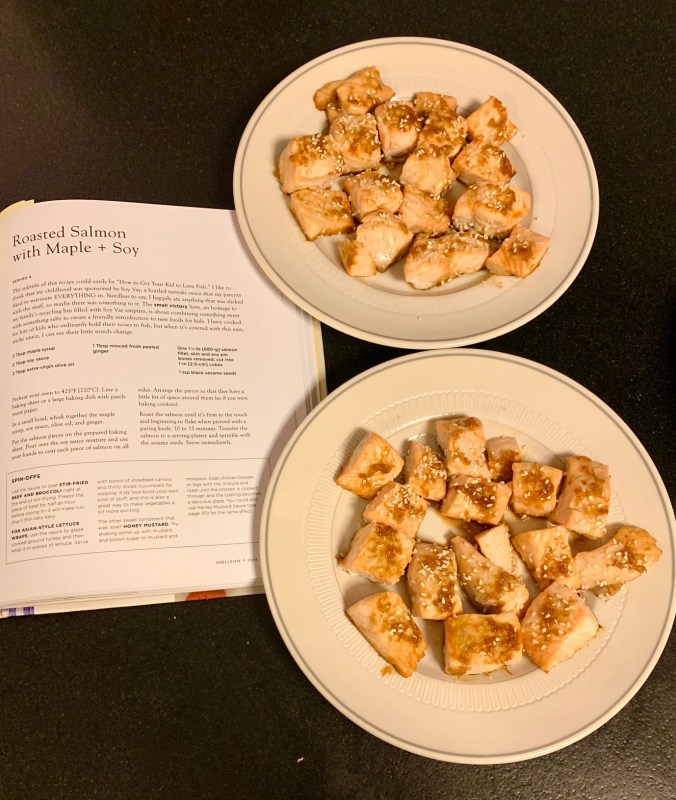
Overall review: As noted above, I’m a fish person and I prefer my salmon on the less-cooked side. By strictly following this recipe, I ended up cooking the fish past the point I like eating it. When making this recipe again, I might skip the cutting of the fish altogether and just use this marinade like my parents use Soy Vey: Cover the whole piece fish and toss it in the oven to cook until it’s just done.
Final thoughts: Use the marinade on a larger piece of fish and cook it to my preferred temperature, and it might make the dinner rotation, skin or no skin.
 Instead I Had Cake